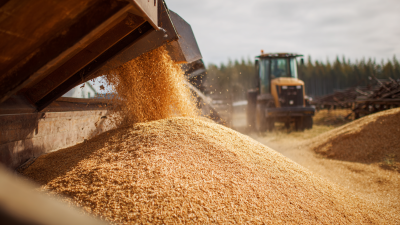
So, the Feed Mill Pellet Machine is pretty much a must-have if you're into animal feed production these days. It takes raw ingredients and turns them into those neat, high-quality pellets that help livestock absorb nutrients better—kind of like giving them a power-up. I came across a report from Technavio that says the global feed pellet market is expected to grow by about 5.23% each year between 2021 and 2025. That just shows how much people are looking for smarter, more efficient feeding solutions these days.
More and more feed mills are turning to advanced machines like this to keep up with the demand. Not only does a Feed Mill Pellet Machine improve the quality of the feed, but it also helps streamline the whole production process. That said, a lot of operators are finding it tricky to strike the right balance between being efficient and being eco-friendly, especially with everyone keeping an eye on how resources are used. A study by Allied Market Research even suggests that adopting new technology is kinda essential if you want a more sustainable way to produce feed.
Plus, how well a pellet machine works really depends on things like the quality of your ingredients and making sure the equipment gets proper maintenance. Regular check-ups can make a huge difference in keeping everything running smoothly. As the industry keeps evolving, having a solid understanding of how feed production works will be more important than ever if you're aiming for success.
A feed mill pellet machine is an essential tool in animal feed production. It transforms raw materials into compact pellets. This process improves feed efficiency. It also enhances nutrient absorption for livestock. Farmers rely on pellet machines to ensure animals receive balanced nutrition.
The machine operates by grinding the ingredients. Then, it applies heat and pressure to form pellets. As a result, the feed becomes more palatable. The compact pellets reduce waste. However, there can be challenges, such as maintaining consistent quality. Sometimes, the moisture levels can affect pellet hardness.
Operators need to monitor the machine closely. Small adjustments can make a big difference. Regular maintenance is key to optimal performance. Even experienced users must stay vigilant. Variations in raw material quality can lead to inconsistencies. Each batch may require tweaking, which demands a keen eye and thoughtful approach.
| Feature | Description |
|---|---|
| Function | To process raw feed ingredients into pellets for easier consumption by livestock. |
| Components | Includes a feeder, conditioner, pellet die, and cooling unit. |
| Pellet Size | Typically ranges from 1.5mm to 8mm depending on the type of feed. |
| Energy Consumption | Varies based on machine capacity and feed ingredients. High-efficiency models reduce energy usage. |
| Production Capacity | Can produce between 0.5 to 20 tons of feed pellets per hour. |
| Applications | Used for poultry, cattle, aquaculture, and other livestock feeds. |
| Advantages | Improves digestibility, reduces waste, and enhances feed storage. |
A feed mill pellet machine plays a crucial role in the animal feed industry. This device transforms raw ingredients into high-quality pellets. The efficiency of this machine greatly affects the production process. Understanding its key components is vital for optimal operation.
One primary component is the granulator. This element compresses the feed mixture under high pressure. The combination of heat and moisture ensures proper binding. The resulting pellets are uniform, enhancing digestibility. According to industry reports, well-formed pellets can improve feed conversion ratios by 10-15%. Operators must regularly maintain the granulator to prevent inconsistencies.
Another critical part is the conditioning chamber. Here, steam and additives are introduced. This process enhances nutrient absorption and helps in proper pellet formation. Reports indicate that effective conditioning can boost pelleting rates significantly. While improvements are notable, achieving the perfect temperature with steam can be tricky. Too much moisture can lead to clumping, affecting the final product. Regular monitoring and adjustments are essential for consistent results.
The feed mill pellet machine plays a crucial role in animal nutrition. Understanding its working principle can enhance feed efficiency. The pelletizing process begins with grinding raw materials into a fine powder. Typically, the materials include grains, oils, and protein sources. According to the USDA, pelleted feed can increase feed conversion ratios by 10-20%.
Once the materials are ground, they are mixed thoroughly. The mixture is then conditioned with steam and moisture. This step is vital, as it helps in binding the ingredients together. The temperature can reach up to 85°C, denaturing proteins and improving digestibility. However, precise controls are necessary. Excessive heat can degrade essential nutrients.
The conditioned mash flows into a pellet die, where high pressure shapes it into pellets. The die's size and shape influence the final product. Research indicates that pellets with a diameter of 2-8 mm are most effective for livestock. The output is cooled to enhance storage stability. However, inconsistencies in temperature or moisture can lead to uneven pellets, affecting feed quality. Monitoring these variables is essential for maintaining optimal production standards.
Feed mill pellet machines play a crucial role in animal feed production. They create pellets that are essential for livestock health and growth. These machines can produce different types of pellets catering to various nutritional needs.
One common type is the feed pellet. These pellets are formulated for different species, including poultry, cattle, and pigs. The formulation may vary, but it primarily focuses on delivering balanced nutrition. Another type is the aquaculture pellet, designed specifically for fish and shrimp farming. These pellets are often more digestible, promoting growth in aquatic species.
There's also the option of custom pellets. Farmers can adjust ingredients based on specific dietary requirements. This flexibility allows for optimal nutrition tailored to individual livestock needs. However, achieving the perfect blend can be challenging. It requires continuous monitoring and adjustments in the production process. Overall, understanding the types of pellets is vital for anyone involved in animal nutrition and feed production.
Pelletized feed has revolutionized animal nutrition by enhancing feed efficiency and nutrient absorption. According to industry research, using pelleted feed can improve digestibility by up to 15%. This increase is significant for farmers aiming to maximize productivity. The compact form of pellets makes them easier for animals to consume. They require less energy for digestion, allowing livestock to utilize nutrients more effectively.
In addition, the manufacturing process of pelletized feed offers consistent quality. This consistency ensures that all animals receive the same nutritional benefits, reducing the risk of deficiencies. Studies indicate that uniformity in nutrition can lead to a 10% increase in weight gain in poultry and swine when compared to non-pelleted options. Furthermore, the preservation of nutrients during processing is crucial. Some vitamins and minerals may degrade in other forms, but pelleting helps protect them during storage.
However, the reliance on pelleted feed does present challenges. Some studies suggest that not all animals adapt well to pellets, affecting their overall health. The natural foraging behavior of certain species may be compromised. Farmers must observe their animals and adjust diets accordingly. Understanding the specific needs of each animal type remains essential in optimizing nutrition and overall well-being.
Pellet machines are essential in the feed mill industry. They produce high-density pellets from raw materials. Efficiency metrics are crucial for their operation. Industry reports show that a well-optimized pellet machine can achieve up to 90% pellet quality. This includes parameters such as shape, hardness, and moisture content.
Power consumption is another important factor. Studies indicate that the energy efficiency of a pellet machine can vary widely. Machines operating under optimal conditions consume around 25% less energy. However, poor maintenance or improper settings can increase this figure significantly. It’s essential for operators to regularly assess these metrics to ensure peak performance.
Quality control remains challenging in many feed mills. Variability in raw materials can lead to inconsistent pellet production. Inconsistent moisture levels can affect pellet durability. Industry experts recommend conducting regular tests on raw ingredients. This practice can help maintain the desired quality standards and reduce waste. Regular audits can also identify inefficiencies and areas needing improvement.
The feed mill pellet machine is evolving rapidly. Innovations in technology are reshaping its operation and efficiency. These changes are driven by the need for higher production rates and improved product quality. Manufacturers are focusing on automating processes, reducing energy consumption, and enhancing feed nutrition. Advanced designs enable better mixing of ingredients, leading to more uniform pellets.
In the coming years, we can expect significant trends. Artificial intelligence will likely play a large role in optimizing the machine's performance. Sensors may monitor the quality of pellets in real-time, ensuring consistency. Additionally, sustainable practices will emerge as crucial. This includes using renewable materials and reducing waste. However, some challenges remain.
Finding the right balance between cost and quality is essential. Not all innovations prove effective immediately. It will take time for the industry to adapt fully to new technologies. Validation of these innovations in practical settings is necessary.
: It transforms raw ingredients into high-quality pellets for animal feed.
The granulator compresses the feed mixture, ensuring proper binding under high pressure.
It introduces steam and additives to enhance nutrient absorption in the feed.
Incorrect temperatures can lead to clumping or nutrient degradation.
They are mixed and then conditioned with steam and moisture before pelletizing.
The die's size shapes the pellets, influencing their effectiveness for livestock.
Pellets with a diameter of 2-8 mm are generally the most effective.
They can lead to uneven pellets, negatively impacting feed quality.
It helps prevent inconsistencies in the pellet production process.
By monitoring temperature and moisture levels during the pelleting process.
A Feed Mill Pellet Machine is a specialized equipment used in the production of animal feed pellets, enhancing the nutritional value and palatability of livestock diets. The machine comprises key components such as a feeder, conditioner, and die, which work together to process raw materials into uniform pellets. The pelletizing process involves the mechanical compaction of feed ingredients under heat and pressure, resulting in a denser form that is easier for animals to digest.
Pelletized feed offers several advantages in animal nutrition, including improved feed efficiency and reduced wastage. Various types of pellets can be produced, catering to different animal species and dietary requirements. Industry standards and efficiency metrics guide the operational performance of Feed Mill Pellet Machines, ensuring safety and quality in production. Looking ahead, advancements in technology promise to enhance the efficiency and sustainability of pellet production in the feed industry.