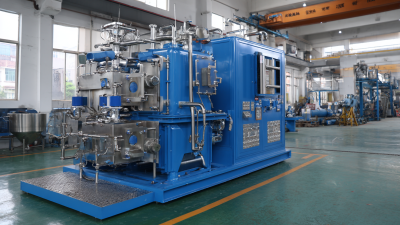
The Single Shaft Paddle Mixer is honestly a pretty key piece of gear in a bunch of industries. It’s basically the workhorse for blending materials smoothly and efficiently. Did you know that, according to the 2022 Global Mixing Equipment Market Report, the demand for these mixers is expected to grow by about 5.2% every year? That really shows just how important they’ve become across different fields — from making food to producing chemicals.
What’s cool about these mixers is that they deliver consistent results, making sure everything gets mixed evenly. Plus, they’re pretty versatile — you can scale them up or down depending on your needs. They’re also designed to use less energy, which is a nice plus since energy efficiency is a big trend right now. That said, some users have mentioned it can be tricky to hit that perfect consistency, especially when working with materials that vary a lot in density. That’s often a sign you need to revisit how you’re operating the equipment and maybe keep an eye on maintenance.
On top of that, because production processes can differ so much, sometimes the quality of the final product can be a bit inconsistent. Luckily, technology is moving fast, and manufacturers are looking into adding smart features to these mixers to make them work even better. Investing in a Single Shaft Paddle Mixer can be a smart move, but it’s really important to take a close look at whether it’s a good fit for your specific materials and processes before jumping in.

Overview of Single Shaft Paddle Mixers
Single shaft paddle mixers are versatile machines used in various industries. They efficiently blend materials, ensuring uniform consistency. These mixers feature a central shaft with paddles that scoop and push the materials. The design allows for effective mixing of both dry and wet substances.
One key aspect of these mixers is their ability to handle a wide range of materials. From powders to granules, they mix effectively. However, achieving perfect consistency can be challenging. Some materials may clump together, leading to uneven mixtures. This is an area that users often need to refine.
Applications vary across sectors like food processing, chemicals, and construction. In food processing, precise mixing ensures ingredients combine well. In construction, it helps in mixing cement and additives uniformly. Users should pay attention to the mixer’s speed and design. These factors can greatly influence mixing quality. Observing the mixing process closely can help identify areas for improvement.
Key Features of Single Shaft Paddle Mixers
Single shaft paddle mixers are essential in many industries. They blend powders, granules, and slurries effectively. Their design allows for even distribution of materials. The paddle shape creates a gentle yet efficient motion. This minimizes degradation of sensitive components.
Key features include their ability to handle various materials. They can mix dry powders and wet slurries well. Also, they have adjustable speed settings. This versatility makes them suitable for different applications. Operators can adapt the mixer to specific needs. Their compact design is another advantage. Many setups have limited space, so this feature is crucial.
However, issues can arise. Sometimes, the mixing isn't as uniform as desired. This can lead to quality inconsistencies in the final product. Regular maintenance is necessary to avoid wear and tear. Without proper care, performance can decline over time. It's vital to monitor the process for best results. A thoughtful approach ensures maximum efficiency and product quality.
Common Applications of Single Shaft Paddle Mixers
Single shaft paddle mixers are versatile tools used in various industries. They excel in combining bulk materials into a uniform mixture. These mixers are common in food processing, pharmaceuticals, and chemical production. Their design allows for a gentle yet effective mixing action, minimizing material damage.
In food processing, single shaft paddle mixers often blend dry ingredients like flour, sugar, and spices. These mixers ensure that each ingredient is evenly distributed. This consistency is crucial for product quality. In the pharmaceutical industry, they handle powders and granules, maintaining the integrity of sensitive substances. The gentle mixing technique helps to preserve active ingredients.
Despite their benefits, using single shaft paddle mixers has challenges. Overmixing can lead to material clumping. It’s important to monitor mix times closely. Additionally, cleaning these mixers can be tedious. Proper maintenance is essential to avoid contamination. Careful consideration of these factors can lead to better outcomes in various applications.
Comparison with Other Types of Mixers
Single shaft paddle mixers are effective in various industries. They provide reliable and consistent mixing, especially for powders and granules. In contrast, other mixers, such as twin-shaft and planetary mixers, each have unique features. Twin-shaft mixers mix materials faster but take up more space. They may also require more maintenance due to their complexity. Planetary mixers can handle a wider range of materials but operate at lower capacities.
One study shows that single shaft paddle mixers have an efficiency rating of around 85%. This rating is higher than some older technologies. However, they may struggle with very sticky materials or those requiring gentle mixing. Companies often need to assess the specific application before making a decision. For heavy-duty tasks, a twin-shaft option might be better, despite its higher costs.
Mixers should match the product to yield the best results. A single shaft paddle mixer may not be ideal for all materials. For example, granular products may need a different approach. Understanding these limitations is vital for informed choices. An industry report noted that many users overlooked these factors, leading to unsatisfactory outcomes. Addressing these mismatches can save time and resources in the long run.
Advantages of Using Single Shaft Paddle Mixers
Single shaft paddle mixers offer significant advantages in various industrial applications. These mixers excel in achieving uniform mixtures of bulk materials like powders and granules. According to industry data, they can effectively blend materials with a consistency of up to 90%. This ensures a high-quality product without the risk of segregation or uneven distribution.
One key benefit is their energy efficiency. Studies show that single shaft paddle mixers can save up to 30% in energy costs compared to other mixing technologies. They are designed to provide consistent results with lower energy consumption. However, their design can sometimes lead to wear and tear, especially when processing abrasive materials. Regular maintenance and monitoring are crucial to avoid performance issues.
Moreover, their versatility is noteworthy. They can handle a variety of materials, from dry powders to moist mixtures. This flexibility makes them suitable for industries like food processing, pharmaceuticals, and feed production. Yet, the specific requirements of each material may demand adjustments in operation. Users must be aware of these nuances to maximize the mixers' efficiency and lifespan.
Best Single Shaft Paddle Mixer Features and Applications
The chart above illustrates the performance metrics of single shaft paddle mixers across various dimensions such as mixing efficiency, energy consumption, maintenance cost, versatility, and durability. Each metric is rated on a scale from 0 to 100, highlighting the advantages of using single shaft paddle mixers in industrial applications.
Maintenance and Care for Paddle Mixers
Paddle mixers are vital in various industries. Keeping them well-maintained is crucial for optimal performance. Regular cleaning after each use prevents material buildup. Ensure that all components are accessible for inspection. Thoroughly check the paddles and shafts. Look for wear and tear regularly. When neglected, even small issues can lead to larger problems.
Lubrication is another essential aspect of maintenance. Use appropriate grease according to the manufacturer’s specifications. Apply it at the correct intervals to avoid breakdowns. Keep an eye on seals and gaskets. These parts can wear out and require replacement. Ignoring them may lead to leaks, affecting efficiency and safety.
Lastly, operator training is key. Workers must understand how to operate the paddle mixer safely. A misunderstanding could lead to mechanical failure or accidents. Encourage your team to report any irregularities. Regular training sessions can foster a culture of care and responsibility. Reflecting on these practices ensures longevity for the paddle mixer.
Industry Standards and Regulations for Mixers
When considering single shaft paddle mixers, compliance with industry standards is crucial. Mixers must meet specific regulations to ensure safety and efficiency. According to the International Organization for Standardization (ISO), mixers should adhere to ISO 9001. This standard emphasizes Quality Management Systems, which significantly impacts product quality. In 2021, about 70% of manufacturers reported benefits from such compliance.
Safety is another area to note. The American National Standards Institute (ANSI) sets safety standards that mixers must follow. Specific attention is needed for electrical components and operational limits. A report from the Occupational Safety and Health Administration (OSHA) highlights that nearly 30% of workplace accidents involve improperly maintained equipment. Regular checks are essential to mitigate such risks.
Environmental considerations are becoming increasingly important. Mixers should meet regulations pertaining to emissions and waste management. The Environmental Protection Agency (EPA) stipulates that industrial mixers must minimize waste. Despite these guidelines, many facilities still struggle to balance production efficiency with environmental impact. There's a noticeable disconnect. Awareness and training are necessary for addressing these evolving challenges.
FAQS
: The product is designed to enhance daily routines. It aims to make tasks simpler.
Use it regularly for best results. Most users benefit from daily use.
Yes, it can be combined with various items. Experiment to find what works best.
Some users report mild discomfort. Always pay attention to how you feel.
Look for changes in your routine. Increased efficiency is a common sign.
Results can vary by individual. Reflect on your usage and adjust as needed.
Generally, it’s suitable for all adults. However, younger users should be cautious.
Yes, it's versatile. It works well at home, work, or on the go.
Store them properly as directed. Discard them if they expire or smell strange.
Many products offer satisfaction guarantees. Always read the terms closely for clarity.
Conclusion
The article provides a comprehensive overview of Single Shaft Paddle Mixers, highlighting their key features such as efficient mixing capabilities, versatility, and ease of operation. These mixers serve a variety of applications across diverse industries, including food processing, pharmaceuticals, and construction. Compared to other types of mixers, Single Shaft Paddle Mixers stand out for their ability to handle a wide range of materials while ensuring homogeneous blends.
Furthermore, the article discusses the advantages of using Single Shaft Paddle Mixers, including lower energy consumption and reduced maintenance needs. Proper maintenance and care are essential for optimal performance, and adhering to industry standards and regulations ensures safety and efficiency. Overall, the Single Shaft Paddle Mixer is a valuable asset in achieving consistent and high-quality mixing outcomes in various settings.