

Introduction
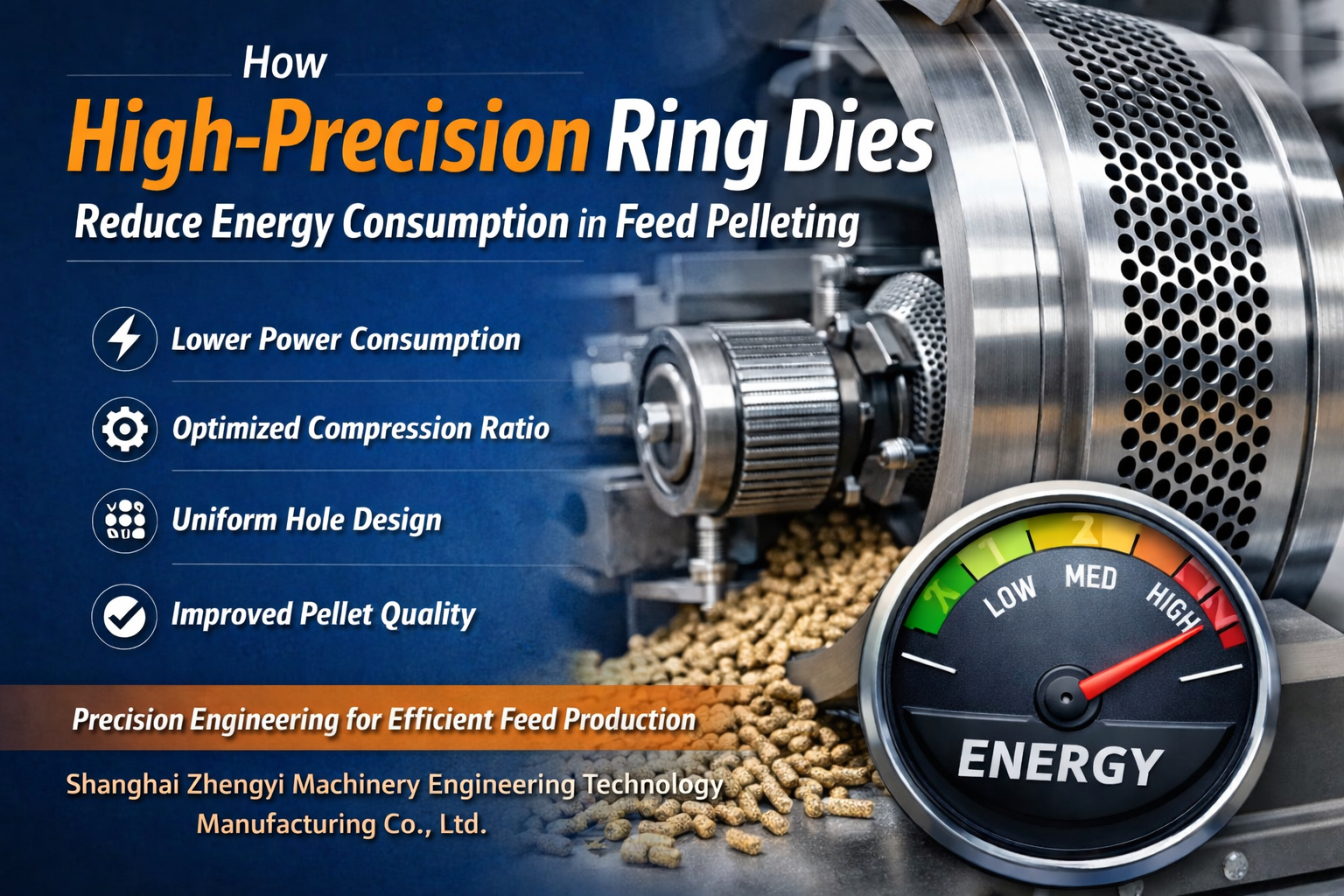
Energy consumption remains one of the most critical cost drivers in feed pelleting operations. For modern feed mills facing rising electricity prices, stricter environmental regulations, and increasing pressure on operational efficiency, reducing energy usage is no longer optional—it is a competitive necessity.Among the many factors influencing pellet mill efficiency, the ring die plays a central yet often underestimated role. High-precision ring dies, engineered with advanced manufacturing tolerances and optimized design parameters, can significantly reduce energy consumption while improving pellet quality and throughput.This article explores why and how high-precision ring dies reduce energy consumption, combining engineering principles with practical insights for feed producers and equipment buyers
The Problem: Why Energy Consumption Is High in Feed Pelleting
Before discussing solutions, it is important to understand the root causes of excessive energy consumption in pelleting systems.
1. Friction Losses in the Die
During pelleting, mash feed is forced through die holes under high pressure. Poorly manufactured or worn dies create:
- Excessive friction between material and die wall
- Uneven resistance across die holes
- Increased load on the main motor
This directly leads to higher energy demand.
2. Inconsistent Compression Ratio
If the compression ratio is not precisely controlled:
- Too high → unnecessary resistance and energy waste
- Too low → poor pellet durability, requiring reprocessing
Both scenarios increase overall energy consumption per ton.
3. Poor Hole Finish and Geometry
Low-quality dies often suffer from:
- Rough inner hole surfaces
- Inconsistent hole diameters
- Misaligned drilling angles
These defects disrupt material flow, increasing resistance and power usage.
4. Uneven Material Distribution
Non-uniform hole distribution or poor die design leads to:
- Uneven wear
- Localized overheating
- Energy inefficiency due to imbalance
The Principle: How Ring Die Precision Affects Energy Efficiency
High-precision ring dies reduce energy consumption by optimizing material flow dynamics and mechanical efficiency.
1. Reduced Friction Through Smooth Hole Finishing
Precision machining and polishing ensure:
- Low surface roughness inside die holes
- Reduced resistance during extrusion
- Lower torque requirement
Result: Less power required per ton of feed produced
2. Optimized Compression Ratio
High-precision dies are designed with accurate control of:
- Effective length (L)
- Hole diameter (D)
- Compression ratio (L/D)
This ensures:
- Efficient compaction without overloading
- Balanced pellet durability and energy consumption
3. Uniform Hole Distribution
Advanced CNC drilling ensures:
- Consistent spacing and alignment
- Equal load distribution across the die surface
Benefits include:
- Reduced vibration
- Stable motor load
- Improved energy efficiency
4. Improved Heat Transfer and Reduced Slippage
Precision dies maintain:
- Stable temperature profiles
- Reduced material backflow and slippage
This minimizes wasted mechanical energy and improves pelleting efficiency.
The Solution: Key Features of High-Precision Ring Dies
To achieve meaningful energy savings, a high-quality ring die must incorporate several critical design and manufacturing features.
1. High-Accuracy CNC Deep-Hole Drilling
Modern ring dies use:
- Multi-axis CNC machines
- Deep-hole drilling with tight tolerances
This ensures:
- Straight, consistent holes
- Minimal deviation
- Stable performance under load
2. Mirror-Level Internal Hole Finish
Polishing technologies (such as honing or electro-polishing) create:
- Ultra-smooth inner surfaces
- Reduced friction coefficient
Practical impact:
- Lower energy consumption
- Reduced die wear
- Improved pellet appearance
3. Customized Compression Ratio Design
Different feed formulations require different die configurations:
|
Feed Type |
Recommended Compression Ratio |
|
Poultry feed |
Medium |
|
Livestock feed |
Medium to high |
|
Aquafeed |
High |
Precision dies are tailored to:
- Raw material characteristics
- Moisture levels
- Desired pellet durability
This avoids unnecessary energy loss.
4. High-Quality Alloy Steel and Heat Treatment
Material selection directly affects:
- Wear resistance
- Thermal stability
- Structural integrity
High-precision dies typically use:
- Premium alloy steel
- Vacuum heat treatment
- Controlled hardness distribution
Result:
- Longer lifespan
- Consistent energy performance over time
5. Optimized Die Working Surface Design
Advanced designs include:
- Relief holes
- Variable hole patterns
- Optimized open area ratio
These features improve:
- Throughput
- Flow efficiency
- Energy utilization
Practical Benefits: Measurable Energy Savings
Feed producers using high-precision ring dies typically observe:
1. Reduced Power Consumption
- 5%–15% reduction in kWh per ton (depending on conditions)
- Lower peak load on pellet mill motors
2. Increased Throughput
- Faster material flow
- Higher production capacity without increasing energy input
3. Lower Maintenance Costs
- Reduced wear on rollers and dies
- Fewer shutdowns and replacements
4. Improved Pellet Quality
- Higher Pellet Durability Index (PDI)
- Better uniformity and appearance
This reduces fines and reprocessing, indirectly saving more energy.
Case Insight: Energy Optimization in Practice
In a typical feed mill upgrade scenario:
- Original die: standard manufacturing, inconsistent hole finish
- Upgraded die: high-precision CNC drilled and polished
Results:
- 10% reduction in motor load
- 8% increase in throughput
- Noticeable improvement in pellet hardness
This demonstrates how precision engineering directly translates into operational savings.
Selection Guidelines for Overseas Buyers
For international buyers sourcing ring dies, especially in the feed machinery and equipment sector, consider the following:
1. Verify Manufacturing Capability
Ask suppliers about:
CNC equipment type
- Hole tolerance standards
- Surface roughness specifications
2. Request Technical Customization
Avoid generic dies. Provide:
Feed formulation details
- Production targets
- Pellet specifications
A professional supplier should offer custom die design, not just standard products.
3. Evaluate Lifecycle Cost, Not Just Price
A cheaper die may result in:
- Higher energy consumption
- Shorter lifespan
- Increased downtime
Focus on cost per ton of production, not initial purchase price.
4. Ensure After-Sales Technical Support
Reliable suppliers provide:
- Die optimization advice
- Troubleshooting support
- Performance improvement recommendations
Brand Perspective: Engineering Value Beyond the Product
For companies specializing in feed machinery and ring dies, delivering high-precision products is not just about manufacturing—it reflects a commitment to:
- Energy efficiency and sustainability
- Customer cost optimization
- Long-term operational reliability
In today’s global feed industry, customers are not only buying components—they are investing in performance solutions.
Conclusion
High-precision ring dies are a critical lever for reducing energy consumption in feed pelleting. By improving material flow, minimizing friction, and optimizing compression dynamics, they deliver measurable benefits in efficiency, cost savings, and product quality.
For feed producers and international buyers alike, the takeaway is clear:
Precision in manufacturing leads directly to efficiency in production.
Investing in high-quality ring dies is not merely a technical upgrade—it is a strategic decision that enhances competitiveness in an increasingly energy-conscious industry.
For more details and knowledge about ring die, please visit to www.cpshzy.com