Engineering Comparison, Risks, and Best Practices for Feed Pellet Mills
In feed pellet production, cleaning a blocked ring die is a critical maintenance task that directly affects die lifespan, pellet quality, and operational safety. When blockage occurs, two cleaning methods are commonly discussed in feed mills: oil boiling and burning.
While both methods aim to remove hardened feed residues from die holes, their mechanisms, risks, and long-term impact on feed pellet ring dies are fundamentally different. Choosing the wrong method can permanently damage a die that is otherwise recoverable.
This article provides an engineering-based comparison of oil boiling and burning, helping feed pellet mills select the safest and most effective cleaning method for blocked ring dies.
The Real Question: Cleaning Effectiveness vs Die Protection
When a feed pellet ring die becomes blocked, the immediate goal is to restore production as quickly as possible. However, short-term recovery should never come at the cost of long-term die damage.
The key question is not simply:
“Which method clears blockage faster?”
But rather:
“Which method removes blockage while preserving die hardness, hole accuracy, and service life?”
From an engineering perspective, this distinction is critical.
Engineering Background: Why Cleaning Methods Matter
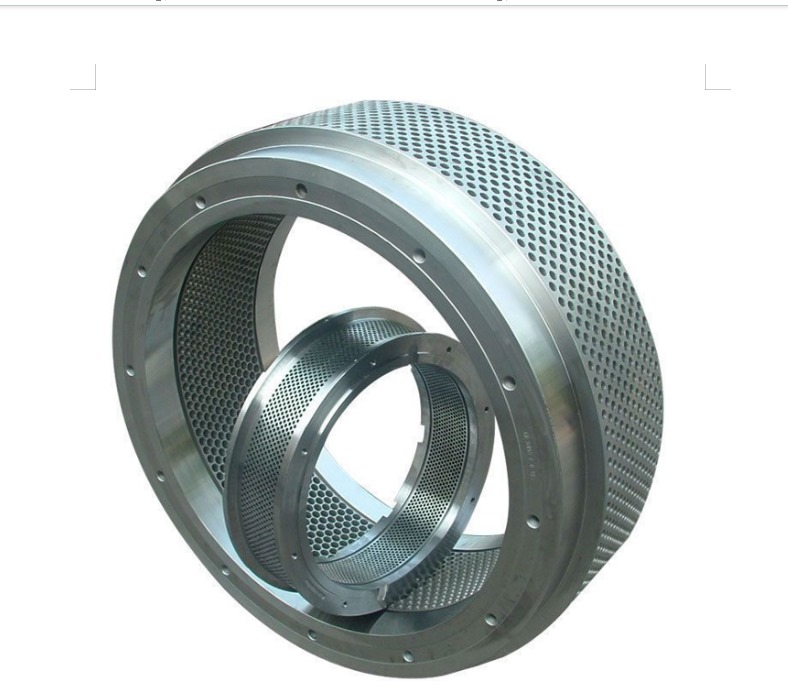
Feed pellet ring dies are precision components manufactured with:
1.Controlled alloy composition
2.Precision hole drilling
3.Specific heat treatment to achieve optimal hardness and toughness
Any cleaning method that alters surface hardness, introduces thermal shock, or distorts hole geometry will reduce die performance—even if the die appears clean afterward.
Understanding how oil boiling and burning interact with die material helps explain why their outcomes differ significantly.
Oil Boiling Method: Controlled and Die-Safe
How Oil Boiling Works
Oil boiling removes blockage by gradual thermal transfer and material softening, rather than destruction.
Engineering characteristics include:
1.Uniform heat distribution through oil immersion
2.Limited oxygen exposure
3.Stable temperature control
4.Progressive softening of fats, starches, and proteins
As feed residues soften, they lose adhesion to die hole walls and can be removed without mechanical force.
Advantages of Oil Boiling for Feed Pellet Ring Dies
From an engineering and maintenance standpoint, oil boiling offers several advantages:
1.Preserves die hardness and heat-treated structure
2.Minimizes risk of micro-cracking
3.Maintains original hole geometry
4.Suitable for high-value feed pellet dies
5.Repeatable and controllable process
For feed mills running continuous production, oil boiling is considered a low-risk, high-reliability cleaning method.
Limitations of Oil Boiling
Oil boiling is not without constraints:
1.Requires time (typically several hours)
2.Needs proper temperature control
3.Requires suitable oil and containment equipment
However, these limitations are generally operational, not technical, and do not compromise die integrity.
Burning Method: Fast but High-Risk
How Burning Is Typically Performed
Burning involves exposing the ring die to direct flame or high-temperature dry heat to carbonize and burn off feed residues inside die holes.
This method is sometimes chosen because it appears fast and requires minimal equipment.
Engineering Risks of Burning Feed Pellet Ring Dies
Despite its apparent simplicity, burning introduces significant risks:
1. Uncontrolled Temperature Exposure
Open flames can easily exceed safe temperature limits, causing localized overheating.
2. Oxidation and Surface Degradation
Direct exposure to oxygen at high temperatures accelerates oxidation, weakening the die surface.
3. Thermal Stress and Micro-Cracking
Uneven heating and rapid cooling create internal stress, increasing the risk of micro-cracks.
4. Loss of Die Hardness
Excessive heat may partially anneal the die material, reducing wear resistance.
In many cases, dies cleaned by burning appear functional initially but fail prematurely during operation.
Oil Boiling vs Burning: Direct Comparison
|
Aspect |
Oil Boiling |
Burning |
|
|
Temperature Control |
High |
Very Low |
|
|
Oxygen Exposure |
Limited |
High |
|
|
Risk of Thermal Shock |
Low |
High |
|
|
Impact on Die Hardness |
Minimal |
Significant |
|
|
Hole Geometry Protection |
Preserved |
Often Distorted |
|
|
Recommended for Feed Pellet Dies |
Yes |
No (except extreme cases) |
|
From an engineering viewpoint, oil boiling is clearly the safer method for feed pellet ring die cleaning.
When Burning Is Sometimes Used—and Why Caution Is Essential
In rare cases, burning may be considered when:
1.The die is already near the end of its service life
2.Severe carbonized blockage cannot be softened
3.Replacement is already planned
Even in these cases, burning should be approached with caution and controlled conditions, understanding that die performance may be compromised.
For dies still expected to operate reliably, burning is generally not recommended.
Best Practices for Safe Feed Pellet Ring Die Cleaning
To minimize risk and maximize die life, feed mills should adopt the following practices:
1.Use oil boiling as the primary cleaning method
2.Avoid open flames and uncontrolled heating
3.Never quench hot dies with water
4.Inspect dies carefully after cleaning
5.Combine cleaning with preventive maintenance
Cleaning should be viewed as part of a broader die management strategy, not an emergency-only solution.
Prevention Reduces the Need for Aggressive Cleaning
The safest cleaning method is the one you rarely need.
Feed pellet mills can reduce severe blockage by:
1.Proper shutdown and flushing procedures
2.Stable conditioning and moisture control
3.Appropriate feed formulation management
4.Selecting dies designed specifically for feed applications
Well-matched feed pellet ring dies are not only easier to clean but also less likely to become severely blocked.
Conclusion
When comparing oil boiling and burning as cleaning methods for feed pellet ring dies, the engineering conclusion is clear:
Oil boiling prioritizes die protection, process control, and long-term performance, while burning trades short-term speed for long-term risk.
For feed pellet mills focused on operational stability, pellet quality, and cost-effective maintenance, oil boiling remains the preferred and safer approach for removing die blockage.
Choosing the right cleaning method—and applying it correctly—can make the difference between extending die service life and accelerating replacement costs.