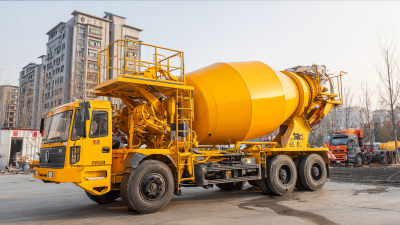
In the ever-evolving construction industry, efficiency and productivity are paramount. The choice of equipment can significantly influence project timelines and cost-effectiveness. Among the different types of mixers available, the Horizontal Shaft Concrete Mixer stands out as a pivotal solution for modern construction needs. According to a recent report by Research and Markets, the global concrete mixer market is expected to grow at a CAGR of 4.5% between 2021 and 2026, driven by rising infrastructure development and increased demand for ready-mixed concrete.
The Horizontal Shaft Concrete Mixer offers a unique amalgamation of durability and performance. Its design facilitates homogeneous mixing, ensuring high-quality concrete that meets rigorous standards. In addition, industry statistics from the American Concrete Institute indicate that properly mixed concrete can enhance the structural integrity of infrastructure projects, ultimately reducing maintenance costs over time. As more construction companies seek to optimize their operations and deliver robust projects, investing in Horizontal Shaft Concrete Mixers can prove to be a game-changer in achieving operational excellence and enhancing profit margins.
By adopting advanced mixing technology, contractors not only benefit from improved production efficiency but also gain a competitive edge in a crowded market. The adoption of Horizontal Shaft Concrete Mixers is not merely a choice but a strategic investment toward meeting future industry demands and sustainability goals.
Horizontal shaft concrete mixers have gained popularity in construction projects due to their numerous benefits. One of the primary advantages of these mixers is their efficiency. The horizontal orientation allows for continuous mixing, which ensures that the concrete is combined uniformly and quickly. This is particularly beneficial for large projects where maintaining a consistent mix is crucial for structural integrity. Additionally, the design facilitates easy loading and unloading, reducing downtime between batches and increasing overall productivity on the job site.
Another significant benefit of horizontal shaft mixers is their versatility. They can handle various materials, including aggregates of different sizes, which makes them suitable for a wide range of construction applications. The ability to adjust the mixing speed also allows operators to customize the consistency of the concrete to meet specific project requirements. Furthermore, these mixers are often more stable and easier to maintain compared to other types, which translates to lower operational costs and enhanced reliability in demanding work environments. Overall, the efficiency and versatility of horizontal shaft concrete mixers make them an excellent choice for construction projects seeking to optimize performance and quality.
Horizontal shaft concrete mixers have gained popularity in the construction industry due to their innovative design and efficiency. One of the key features is their enhanced mixing capability, which ensures a uniform consistency in concrete blends. According to a report by the U.S. Department of Commerce, thoroughly mixed concrete can improve the strength of concrete by up to 20%, making horizontal shaft mixers essential for high-quality construction. This uniformity is achieved through a combination of the unique mixing action and optimal blade configuration, allowing for better integration of materials and minimized waste.
Another significant advantage of horizontal shaft concrete mixers is their versatility. They are capable of handling various types of concrete mixes, including dry cast, wet cast, and high-performance solutions. Research conducted by the National Ready Mixed Concrete Association indicates that projects utilizing horizontal shaft mixers report higher productivity rates, often yielding up to 30% more concrete per hour when compared to traditional vertical mixers. This increase in output is particularly valuable for large-scale construction projects where time and efficiency are crucial. Furthermore, their design allows for easy maintenance and reduced downtime, making them an attractive choice for contractors looking to optimize their workflows.
When considering concrete mixers for construction projects, the choice between horizontal and vertical shaft mixers can significantly impact efficiency and output quality. Horizontal shaft mixers tend to excel in providing a consistent and homogenous concrete mix, making them ideal for larger construction projects. Their design promotes efficient material distribution and helps achieve the desired workability. The mixing action in horizontal mixers is facilitated by multiple blades and a detailed mixing strategy, ensuring that all components, from aggregates to water, are blended adequately.
On the other hand, vertical shaft mixers are often preferred for their compact design, which allows for ease of handling in tighter spaces. They typically require less power and can be more efficient for smaller batches or specialized mixes. However, they may not achieve the same level of thorough mixing as their horizontal counterparts, particularly for larger volumes. Therefore, assessing the scale and specific needs of your project will guide your decision on which mixer type to use.
Tips: When selecting a mixer, consider the size of your projects and material types. For large-scale applications, a horizontal mixer may offer better results in mixing efficiency. Conversely, for smaller, quick jobs, a vertical mixer could save space and energy. Always evaluate the mixer’s capacity in relation to your production needs to optimize workflow.
| Feature | Horizontal Shaft Mixer | Vertical Shaft Mixer |
|---|---|---|
| Mixing Efficiency | High efficiency due to continuous mixing process | Moderate efficiency, suitable for batch mixing |
| Mix Size Capacity | Large capacity, suitable for bigger projects | Smaller capacity, ideal for residential or smaller scale projects |
| Maintenance | Easier and less frequent maintenance | May require more frequent maintenance due to wear and tear |
| Cost | Higher initial cost but more cost-effective over time | Lower initial cost but may incur higher operational costs |
| Application Versatility | Highly versatile for various concrete mixes | Less versatile, better for specific applications |
Horizontal shaft concrete mixers are increasingly popular in various construction projects due to their efficiency and versatility. These mixers are particularly effective for large-scale projects, including road construction, bridge building, and industrial applications. Their design promotes a consistent mixing process, allowing for the production of high-quality concrete that meets the stringent demands of modern construction standards.
When it comes to applications, horizontal shaft mixers excel in producing precast concrete products, where uniformity is crucial. They are also ideal for ready-mix concrete operations, which require quick turnaround times and reliable output. These mixers can handle different types of aggregates and mixtures, making them suitable for specialized concrete applications, such as high-strength concrete or self-compacting mixes.
Tips: When choosing a horizontal shaft mixer for a specific project, consider the volume of concrete needed and the desired mixing speed. Ensure that the mixer can accommodate the types of materials you plan to use, as this will impact both the quality and efficiency of your mix. Regular maintenance is also key to prolonging the lifespan of the mixer and ensuring consistent performance throughout the project.
Maintaining a horizontal shaft concrete mixer is crucial for ensuring optimal performance and longevity. Regular maintenance practices can prevent wear and tear that may lead to costly repairs or unplanned downtimes. One essential tip is to routinely check and clean the mixing blades. Over time, concrete residue can build up, obstructing the mixing process and compromising the quality of the mix. Keeping blades free of obstructions enhances the efficiency of the mixer and ensures consistent results.
Another important aspect of maintenance is monitoring the lubrication of the mixer’s components. Proper lubrication reduces friction and wear on moving parts, significantly prolonging their lifespan. It is advisable to establish a routine inspection schedule to check oil levels and apply lubricant as needed. Additionally, seals and gaskets should be regularly inspected for signs of wear or damage, as these can lead to leaks and affect the mixer’s functionality. By prioritizing these maintenance practices, operators can maintain the reliability of their horizontal shaft concrete mixers and ensure successful outcomes in their construction projects.
When it comes to construction projects, cost-effectiveness is a significant factor to consider, especially in today's competitive market. Horizontal shaft concrete mixers have gained popularity due to their efficiency and economical operations. These mixers are designed to provide a consistent mix of concrete while reducing both material waste and labor costs. The unique design allows for a more uniform mixing process, which helps in producing high-quality concrete without the need for excessive adjustments or rework, ultimately saving money on materials.
Additionally, the operational costs associated with horizontal shaft concrete mixers are typically lower than other mixer types. Their durability and low maintenance requirements contribute to a longer lifespan, leading to reduced replacement expenses. Furthermore, these mixers often have higher production capacities, allowing contractors to complete projects more quickly and effectively. This increase in productivity not only saves time but also translates into significant cost savings, making horizontal shaft concrete mixers an ideal choice for budget-conscious construction projects.
When it comes to choosing equipment for construction projects, horizontal shaft concrete mixers stand out due to their innovative technology designed to enhance performance and efficiency. The latest advancements in this type of mixer focus on improving the mixing process, achieving faster cycles, and optimizing energy consumption. These innovations include the implementation of advanced paddle designs that create a more uniform mix, leading to better quality concrete. Additionally, modern controls and automation features allow for precise monitoring and adjustment of mixing parameters, ensuring consistency in every batch.
Tips for maximizing the benefits of horizontal shaft concrete mixers include regularly maintaining the equipment to ensure optimal performance and lifespan. Keeping the mixer clean and checking for wear and tear on mixing components can prevent costly downtimes. Another valuable tip is to experiment with various mix designs tailored to specific project requirements, as the versatility of horizontal shaft mixers can accommodate a range of concrete compositions.
Furthermore, investing in training for operators can yield significant advantages. Well-trained personnel can navigate the advanced features of the mixers effectively, enabling them to troubleshoot issues quickly and implement best practices in mixing. By embracing the innovations in horizontal shaft concrete mixer technology, construction projects can achieve superior results in terms of quality and efficiency.
: Horizontal shaft concrete mixers offer efficiency, consistent mixing, easy loading/unloading, and increased productivity, making them ideal for large projects.
Their enhanced mixing capability ensures uniform consistency in concrete blends, which can increase concrete strength by up to 20%.
They are versatile and can manage various mixes, including dry cast, wet cast, and high-performance solutions.
Their design allows for higher productivity rates, often yielding up to 30% more concrete per hour compared to traditional vertical mixers.
Yes, they are economical, reducing material waste and labor costs while offering lower operational costs over time due to their durability and low maintenance requirements.
The ability to adjust the mixing speed allows operators to customize the consistency of the concrete to meet specific project requirements.
They are generally easier to maintain than other types, which leads to reduced downtime and operational interruptions.
Their stable design and enhanced mixing capabilities contribute to their reliability, making them suitable for various construction projects.
Their efficient loading and unloading process minimizes downtime between batches, enhancing overall productivity on the job site.
They save money by producing high-quality concrete with less material waste, lower operational costs, and faster project completions.
The article "Why Choose a Horizontal Shaft Concrete Mixer for Your Construction Projects" highlights the numerous advantages of using Horizontal Shaft Concrete Mixers in construction. These mixers are known for their efficiency, offering consistent and high-quality concrete by thoroughly blending materials. Key features include robust construction, ease of operation, and the ability to handle various concrete mixtures, making them suitable for a wide range of construction applications.
Additionally, the article compares Horizontal and Vertical Shaft Concrete Mixers, emphasizing the superior performance of horizontal mixers in large-scale projects. It also discusses essential maintenance tips to extend the lifespan of these mixers and evaluates their cost-effectiveness in the long run. Finally, innovations in Horizontal Shaft Concrete Mixer technology are explored, showcasing advancements that enhance productivity and sustainability in construction. This thorough examination reveals why investing in a Horizontal Shaft Concrete Mixer can be a strategic decision for construction professionals.